Our method
We teach with science
Every lesson you take is built to a shape taken from published research, and measured against it before it ever reaches you.
Knowing a word is really four skills, each one harder than the last, and a lesson is not finished with a word until you have climbed all four.
 1
1 2
2 3
3 4
4
- Read it
- Hear it
- Say it
- Recall it
The ladder
Seeing a word once is not learning it
Most apps stop at the first step: you tap the right picture, the word turns green, and that counts as learned. We take you up all four: a lesson makes you recall every new word several times before it lets you go, and the lessons after it bring the word back again.
The idea is not ours: Nakata (2017) had learners recall new words one, three, five or seven times and tested them two weeks later. The words recalled five and seven times held. The ones recalled once or three times did not.
Times a new word was recalled
- Faded
- Faded
- Held
- Held
Remembered two weeks later?
Three ways in
Read it, hear it, say it
A word you have only ever read is a word you will not catch when a real person says it, and one you have never said is a word you cannot use. So every word reaches you three ways: on the page, in your ear with no text to lean on, and out of your own mouth.
- Shownread on a card, with its meaning
- Heardspoken to you, no text to lean on
- Producedsaid by you, out loud
Remembering
We make sure you don’t forget
A word you meet once is a word you lose. So every word you learn comes back on its own: a couple of lessons later, then further apart each time, until you no longer have to try. By the end of a course, a word has come back in many different exercises.
- taught
- 1st
- 2nd
- 3rd
- 4th
Lessons, one dot each →
Pacing
Four new words at a time
We add words slowly on purpose, so nothing arrives faster than it can stick. Some lessons bring no new words at all: they are there to bring back what you already have.
New words in the lesson
- 1
- 2
- 3
- 4
- 5
- 6
- 7
- 8
- 9
- 10
- 11
- 12
Lessons, in order

Coverage
Written against a real syllabus
Every course is planned against the reference its language already has, level by level, so the words you learn are the ones that matter. Swiss German has no official standard at all, so its course follows the school that has taught it for over twenty years.


Variety
Many ways to be asked
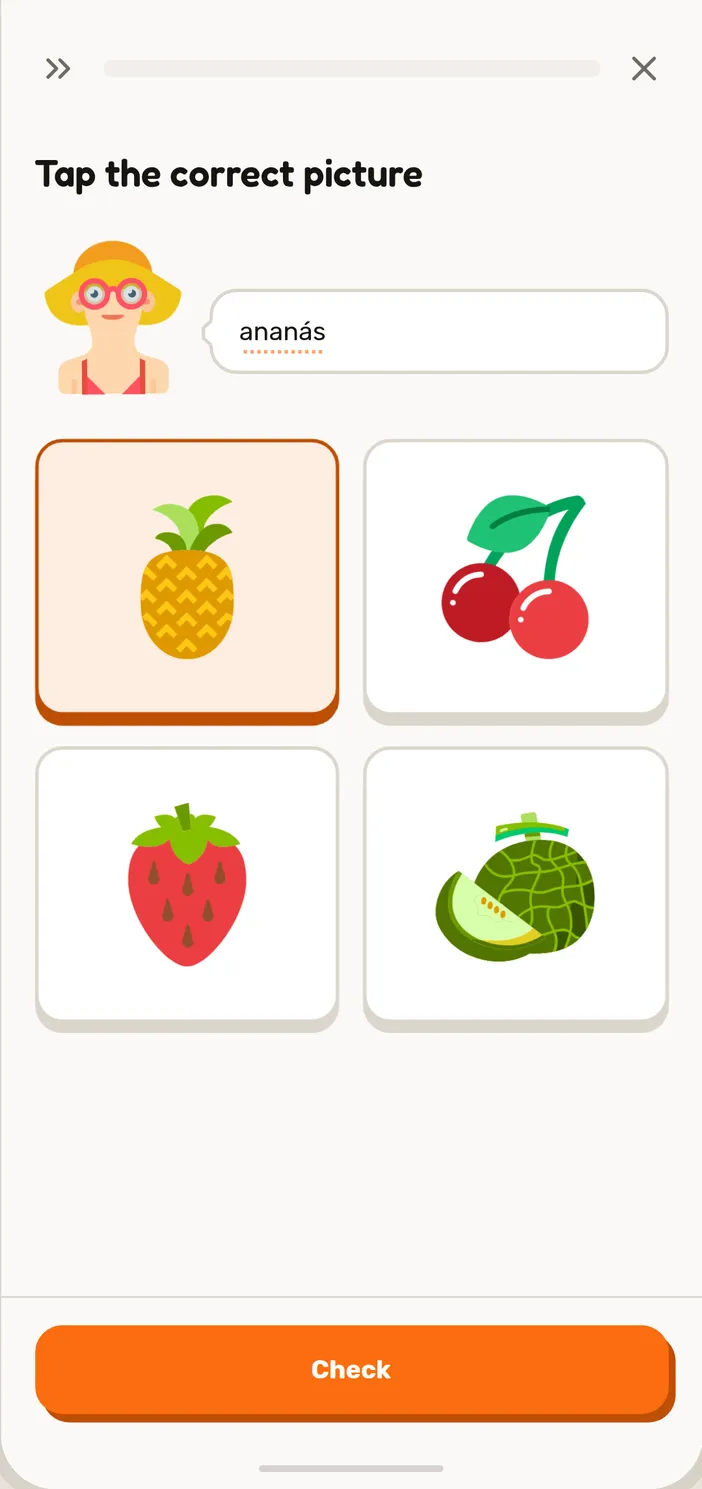
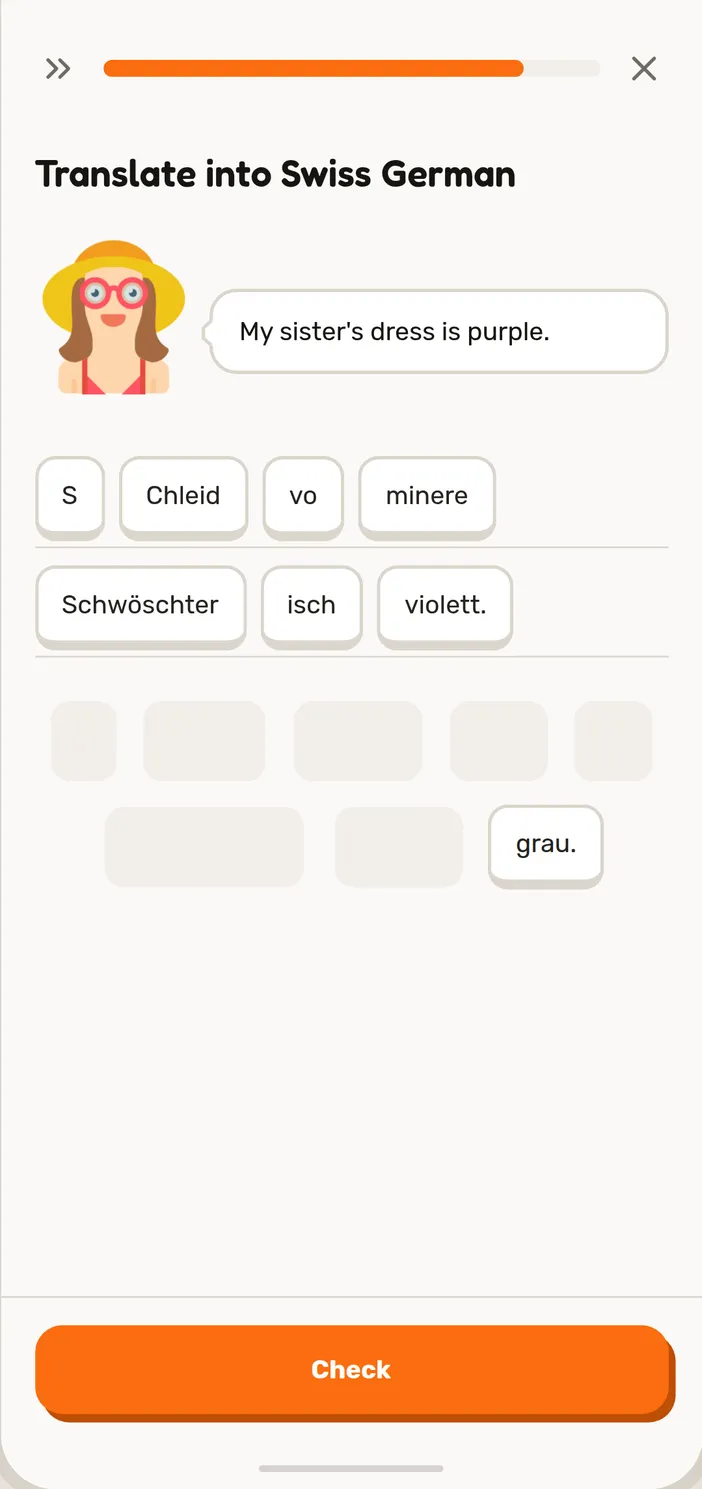
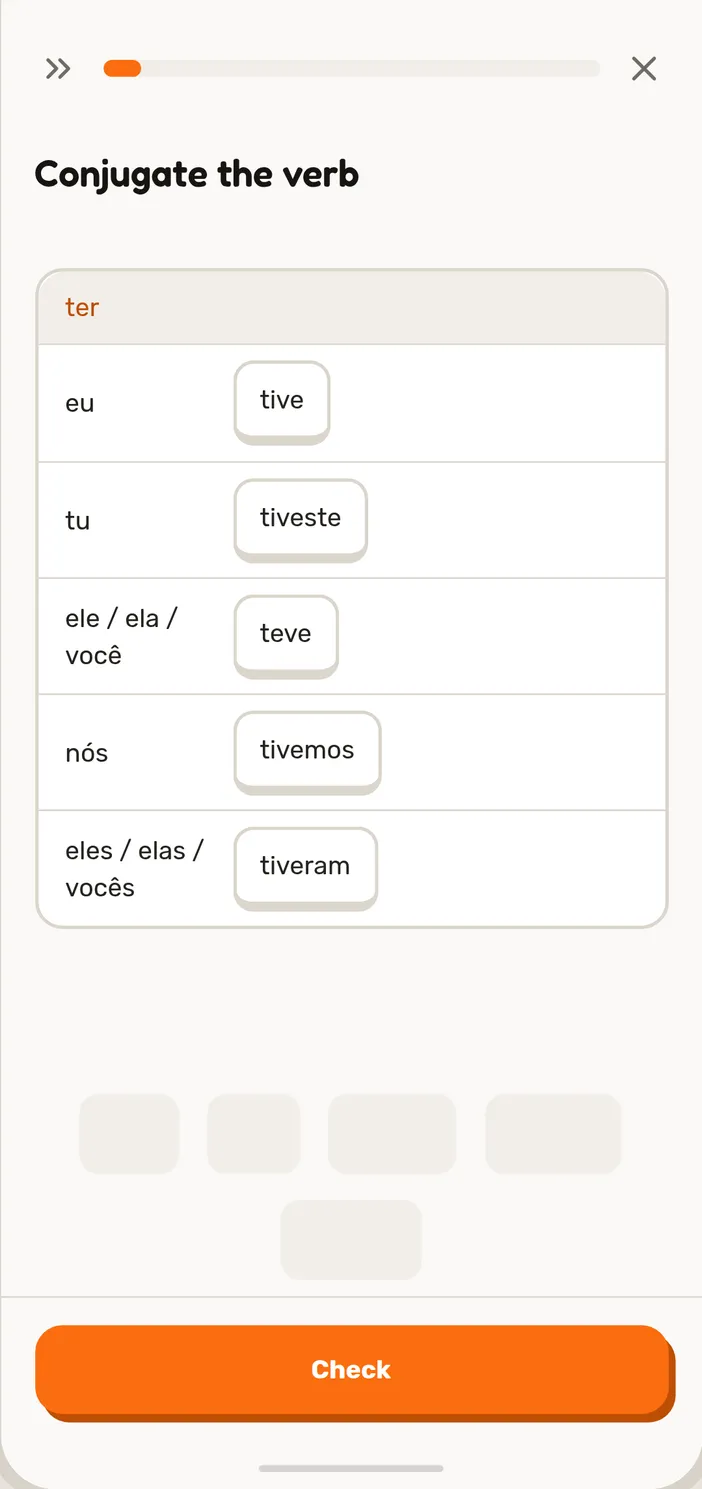
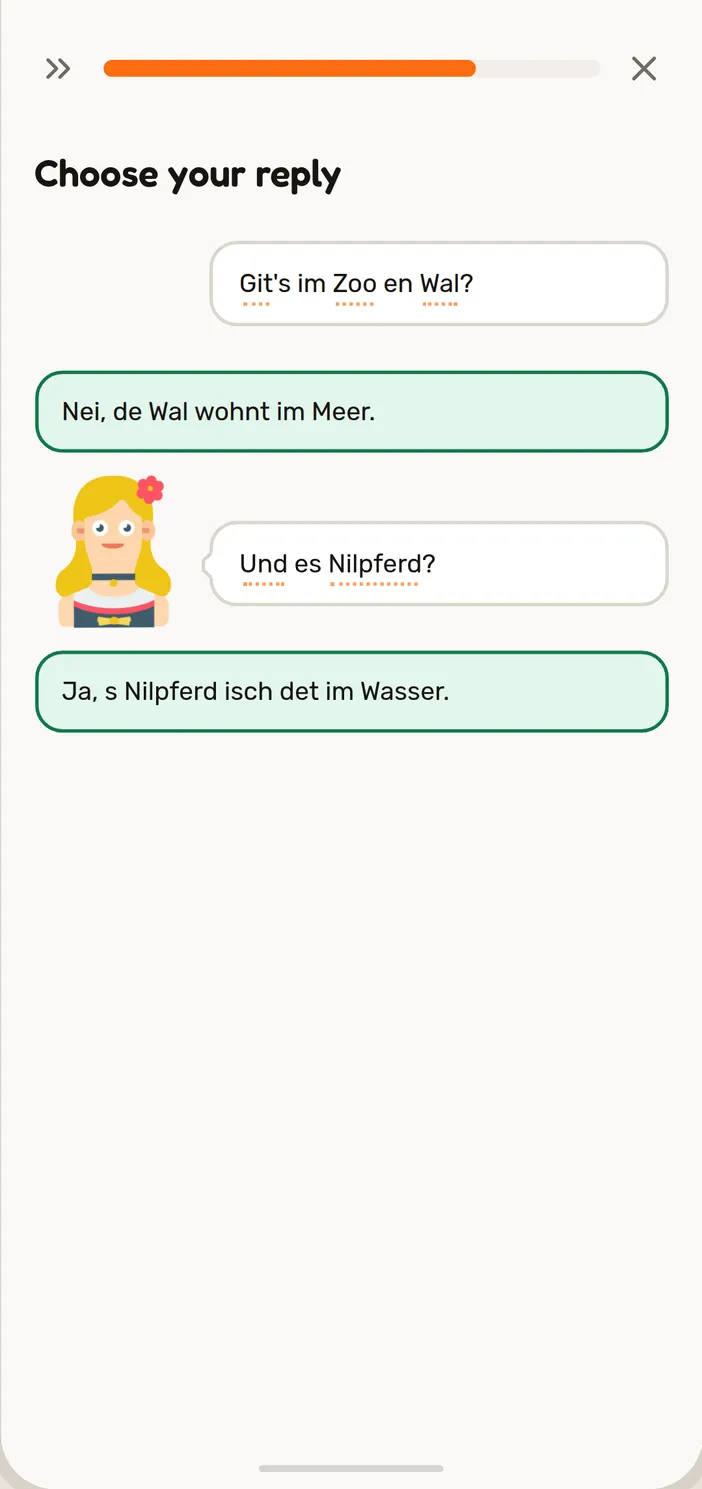
Five recalls of the same kind is one skill practised five times. So every time a word comes back it asks you something different.
References
Laufer & Goldstein, 2004
Testing Vocabulary Knowledge: Size, Strength, and Computer Adaptiveness
Language Learning 54(3), 399–436
Nakata, 2017
Studies in Second Language Acquisition 39(4), 653–679
Gor, Cook, Bordag, Chrabaszcz & Opitz, 2021
Fuzzy Lexical Representations in Adult Second Language Speakers
Frontiers in Psychology 12
Hwang, 2025
Undesirable Difficulty of Interleaved Practice
Language Learning
Settles & Meeder, 2016
A Trainable Spaced Repetition Model for Language Learning
Proceedings of the 54th Annual Meeting of the ACL, 1848–1858
Short lessons, built on evidence,
that work in a tunnel.
Speeku's audio, its speech checking and its dictionary all live on your phone. One-time payment, fully offline, and nothing about your learning ever leaves the device.
Get Speeku